Recruitment is changing rapidly. As organisations receive more applications, compete for skilled talent and work to improve hiring decisions, traditional recruitment methods can become time-consuming and difficult to manage.
Artificial Intelligence (AI) is helping HR teams rethink how they attract, evaluate and select candidates. From resume screening to AI-powered interviews, recruitment technology is creating new opportunities to make hiring processes more structured and efficient.
But what exactly is AI in recruitment, how does it work, and how can HR teams use it responsibly?
This guide explores the applications, benefits, challenges and future of AI in recruitment.
What Is AI in Recruitment?
AI in recruitment refers to the use of artificial intelligence technologies to support different stages of the hiring process.
These technologies can analyse information, identify patterns, assist with candidate screening and support recruiters in evaluating applicants.
Depending on the platform, AI-powered recruitment tools can help with:
- Resume screening and candidate matching.
- Job description creation.
- Candidate assessments and interviews.
- Recruitment workflow automation.
- Analysing recruitment data.
AI is designed to support recruitment teams, not replace human judgement. Recruiters remain responsible for evaluating candidates and making final hiring decisions.
How Is AI Used in Recruitment?
AI can support several stages of the recruitment journey.
1. Resume Screening
Reviewing hundreds of resumes manually can take considerable time. AI-powered screening tools can analyse resumes against predefined job requirements and help recruiters identify potentially relevant candidates.
This can help HR teams organise applications and focus their attention on suitable profiles.
2. Candidate Matching
AI tools can compare candidate information with job requirements, including skills, qualifications and experience.
This can help recruiters identify candidates whose profiles align with the position. However, matching recommendations should always be reviewed by a human recruiter.
3. AI-Powered Interviews
Interviews are an important part of evaluating candidates, but coordinating and conducting them can require significant time and resources.
AI-powered interview platforms can support structured interview processes and help recruiters gather additional information about candidates.
4. Recruitment Workflow Automation
Recruitment involves several administrative activities, such as organising applications, coordinating interviews and managing candidate information.
Depending on the technology used, automation can reduce repetitive administrative work and help recruitment teams manage their workflows.
5. Recruitment Analytics
AI-powered analytics can help organisations examine recruitment information, identify patterns and understand different aspects of their hiring processes.
These insights can support better-informed recruitment planning and decision-making.
Benefits of AI in Recruitment
When implemented responsibly, AI can offer several benefits to HR teams.
Improved Efficiency
AI-powered tools can support repetitive tasks and help recruiters manage large volumes of candidate information.
More Structured Candidate Evaluation
Technology can support consistent assessment processes when organisations use clearly defined and job-related evaluation criteria.
Better Recruitment Insights
Recruitment analytics can help HR teams understand patterns and identify areas where their processes may need improvement.
Support for Skills-Based Hiring
AI tools can help recruiters examine candidate skills and experience rather than relying exclusively on traditional resume information.
More Time for Human Interaction
By supporting administrative activities, recruitment technology can allow HR professionals to dedicate more attention to candidate conversations, relationship building and final hiring decisions.
Challenges and Risks of AI in Recruitment
Although AI offers opportunities, organisations must understand its limitations before introducing it into recruitment.
1. Algorithmic Bias
AI systems can reflect biases present in their training data or design. If these biases are not identified and addressed, automated recommendations may disadvantage certain groups.
2. Data Privacy
Recruitment platforms may process personal information, including resumes, employment histories and interview responses. Organisations must handle candidate information responsibly and comply with applicable data protection requirements.
3. Lack of Human Judgement
AI cannot fully understand every aspect of a candidate's personality, circumstances or potential. Recruiters should not rely entirely on automated assessments.
4. Transparency and Accountability
Candidates should be treated fairly and understand how technology is used during the hiring process. Employers should establish clear policies for reviewing AI-generated recommendations.
Best Practices for Using AI in Recruitment
HR teams can get more value from recruitment technology by following a responsible implementation approach.
- Define clear hiring requirements: Establish the skills and qualifications needed before selecting AI tools.
- Keep humans involved: Use AI to support decisions, not make final hiring decisions without appropriate human oversight.
- Evaluate for bias: Regularly review assessment methods and outcomes for potential unfairness.
- Protect candidate data: Follow appropriate privacy, security and data retention practices.
- Choose suitable technology: Select tools that address actual recruitment challenges and fit organisational requirements.
- Monitor performance: Review whether the technology is genuinely improving the recruitment process.
How HyeRHub.ai Supports AI-Powered Recruitment
HR teams exploring AI-driven hiring can also consider specialised recruitment technology such as HyeRHub.ai.
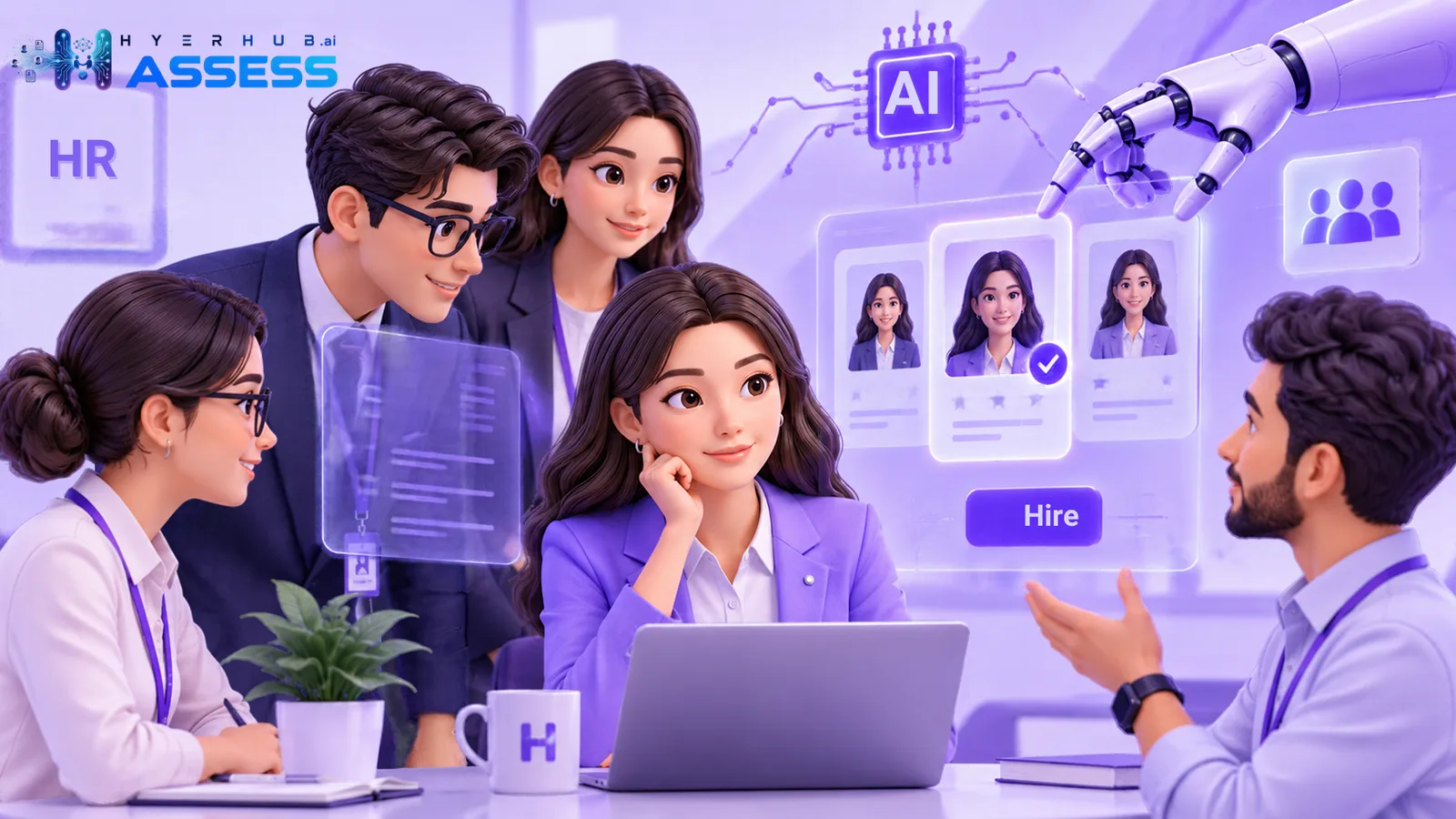
Its Assess solution focuses on AI-powered interviews and candidate assessment, helping recruiters bring a technology-driven approach to evaluating candidates.
By exploring HyeRHub Assess – AI Interview Platform, HR professionals can learn how AI-powered interviews can support their candidate evaluation process.
The Future of AI in Recruitment
AI is likely to play an increasingly important role in recruitment as organisations explore new ways to evaluate skills, manage candidate information and improve hiring workflows.
However, the future of recruitment will not depend on technology alone. Human judgement, empathy, communication and accountability will remain essential.
The most effective approach is to combine the capabilities of AI with the experience and decision-making skills of HR professionals.
Conclusion
AI in recruitment is changing how organisations approach candidate screening, interviews, assessments and hiring workflows.
It offers opportunities to improve efficiency, support structured evaluations and provide useful recruitment insights. At the same time, organisations must address concerns around bias, privacy, transparency and human oversight.
For HR teams, the goal should not simply be to adopt AI, but to use it thoughtfully.
By combining responsible AI technology with human judgement, organisations can build recruitment processes that are more structured, informed and candidate-focused.
Ready to explore AI-powered candidate assessment? Discover HyeRHub Assess.